
Why Kids Should Go Barefoot More: The Complete Guide to Barefoot Play & Healthy Foot Development
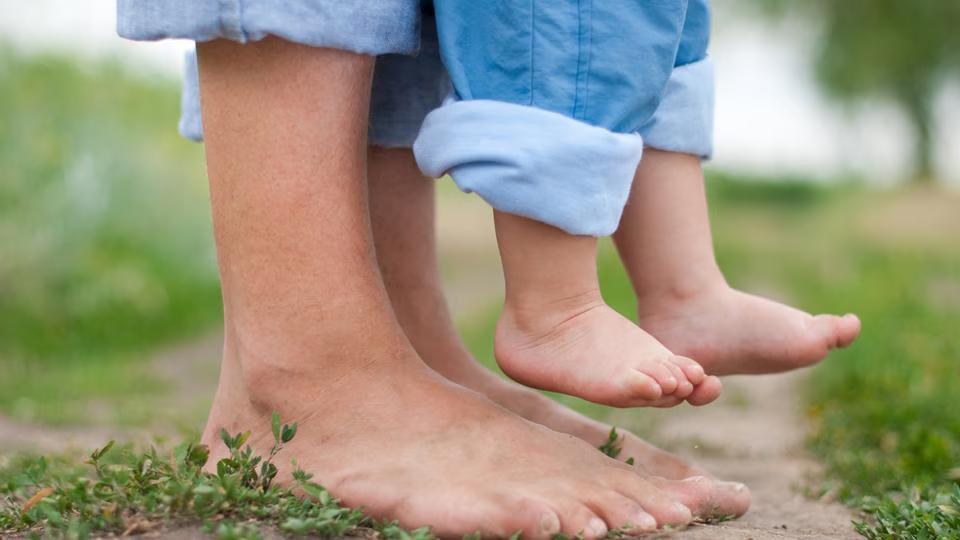
Sometimes the best thing you can put on your child’s feet… is nothing at all.
Have you ever bought your child a brand-new pair of shoes, only to watch them take them off a few minutes later?
Or perhaps your toddler pulls off their socks the moment you turn your back, happily wriggling their toes across the living room floor before running barefoot into the garden.
For many families, it’s an everyday occurrence.
Children seem naturally drawn to exploring the world through their feet.
They splash in puddles, dig their toes into sand, walk across soft grass and carefully test unfamiliar textures beneath them. Long before they can explain what they’re feeling with words, they learn about their surroundings through movement, touch and play.
It’s something most parents notice.
But it also raises an important question.
Should children spend more time barefoot?
For many years, parents were encouraged to keep children’s feet protected inside supportive shoes for most of the day. Today, researchers and healthcare professionals have a better understanding of how children’s feet grow and how movement, play and sensory experiences contribute to healthy development.
That doesn’t mean children should never wear shoes.
Far from it.
Shoes play an important role in protecting growing feet from sharp objects, hot surfaces, cold weather and other environmental hazards.
However, when the environment is safe and appropriate, spending time barefoot allows children to move naturally and experience the world directly through their feet.
This guide brings together current evidence, practical advice and expert recommendations to help parents understand:
- how children’s feet develop
- what barefoot play really means
- what current research tells us
- when barefoot time may be beneficial
- when shoes are the better option
- and simple ways to encourage safe barefoot experiences both indoors and outdoors.
Whether your baby is just discovering their toes, your toddler is taking their first confident steps or your older child loves exploring outdoors, this guide will help you make informed decisions with confidence.
Guide Information
Reading time: 12-15 minutes
Suitable for: Parents of babies to school-age children
Clinically reviewed by: Dr Jane Smith, HCPC Registered Podiatrist
Last updated: August 2026
Quick Answer: Why Should Children Spend Time Barefoot?
When it’s safe and appropriate, barefoot play allows children to experience different surfaces naturally, move without unnecessary restrictions and receive rich sensory information through their feet. Shoes remain essential for protection in many situations, but they do not need to be worn all the time. A healthy balance between barefoot time and appropriate footwear gives children opportunities to explore, play and move confidently in different environments.
Key Takeaways
✔ Children’s feet continue developing throughout childhood.
✔ Barefoot play allows children to experience different surfaces and textures directly.
✔ Shoes are important for protection, but there are many situations where children can safely enjoy time barefoot.
✔ Different surfaces provide different sensory experiences that become part of everyday play.
✔ Indoor sensory environments can provide additional opportunities for barefoot exploration when outdoor play isn’t practical.
What Is Barefoot Play?
Many people assume that barefoot play simply means children walking around without shoes.
In reality, it’s much more than that.
Barefoot play is about giving children opportunities to explore, move and play naturally while their feet experience the different textures, temperatures and surfaces around them whenever it’s safe to do so.
For young children, these experiences happen naturally throughout the day.
A baby may explore the world by kicking their feet during tummy time.
A toddler may enjoy feeling the difference between carpet and wooden flooring.
An older child might run across grass, balance on smooth rocks at the beach or leave footprints in wet sand.
Each surface provides a different sensory experience.
Some feel soft.
Others feel cool, warm, firm, smooth or uneven.
Together, these experiences become part of how children interact with the world around them.
Importantly, barefoot play is not about avoiding shoes altogether.
Instead, it’s about recognising that children benefit from having opportunities to move naturally whenever the environment makes barefoot play both practical and safe.
Rather than thinking about barefoot versus shoes, it’s more helpful to think about choosing the right option for the right situation.
Shoes protect growing feet when protection is needed.
Barefoot time gives children opportunities to experience natural movement when conditions allow.
Both have an important place in childhood.
🌱 Why This Matters
Children don’t separate movement, learning and play into different activities—they happen together.
Whether they’re climbing over cushions, exploring the garden or building a den in the living room, they’re constantly learning through movement.
Their feet are part of that learning process too.
Why Do Children Naturally Prefer Being Barefoot?
Watch a young child when they take off their shoes.
Their toes spread.
They wiggle their feet.
They move differently.
Many children instinctively seek out opportunities to explore the world beneath them.
This isn’t something parents usually teach.
It’s something many children naturally choose.
Before babies can walk, they discover their own feet.
They grab their toes during tummy time, kick excitedly during nappy changes and gradually begin using their feet to push, balance and explore movement.
As children grow, their feet become one of the ways they gather information about the world around them.
Grass feels different from carpet.
Wooden flooring feels different from soft rugs.
Sand feels different from pebbles.
Even small changes in texture create new experiences.
Rather than viewing a child’s desire to remove their shoes as a problem, it may be more helpful to see it as part of their natural curiosity and exploration.
Of course, this doesn’t mean children should always be barefoot.
Safe barefoot play depends on the environment.
But whenever it’s appropriate, allowing children to explore without shoes can become another enjoyable part of active play.
👣 Try This at Home
Choose a safe space indoors and invite your child to walk across a few different surfaces.
For example:
- carpet
- wooden flooring
- a soft blanket
- a textured towel
- a play mat
- grass in the garden (weather permitting)
Ask simple questions as you explore together:
- Which one feels soft?
- Which surface feels bumpy?
- Can you find the coolest surface?
- Which one would you like to walk on again?
There are no right or wrong answers.
The goal is simply to encourage curiosity and conversation while your child explores different sensations through play.
📚 Research Snapshot
Children’s feet contain thousands of sensory receptors that help detect changes in the surface beneath them. These sensory signals contribute to how the brain understands movement and body position. Researchers continue to investigate how barefoot movement influences foot function, balance and motor development during childhood, although many factors contribute to healthy development and individual outcomes vary.
Further reading:
The Royal College of Podiatry (https://rcpod.org.uk/)
National Health Service (NHS) (https://www.nhs.uk/)
(Specific research studies discussing barefoot locomotion and paediatric foot development will be cited later in this guide where directly relevant.)
💡 Common Parent Question
“Is it okay if my toddler prefers being barefoot at home?”
For most children, spending time barefoot indoors can be perfectly normal when the environment is safe and free from hazards. Every child is different, however, and footwear is still important whenever protection from the environment is needed.
If you’re specifically navigating the toddler years, you may also find our guide to Why Barefoot Play Is Essential for Toddler Development (https://barefootkids.co.uk/why-barefoot-play-is-essential-for-your-toddlers-development-benefits-for-feet-balance-and-coordination/) helpful, as it explores this stage of development in greater depth.

How Children's Feet Develop: Why Early Years Matter
A child’s foot is remarkably different from an adult’s.
Although children’s feet may look like miniature versions of ours, they are still growing, changing and developing throughout childhood. Understanding this journey helps explain why movement, play and appropriate footwear are all important during different stages of development.
Parents are often surprised to learn that the feet continue developing long after a child has learned to walk. In fact, the structures inside the foot gradually mature over many years, which is one reason healthcare professionals often encourage parents to pay attention to foot health from an early age.
Rather than thinking of children’s feet as “finished”, it’s more accurate to think of them as a work in progress.
From Birth to First Steps
At birth, a baby’s feet are soft, flexible and made up largely of cartilage rather than fully developed bone. Over time, this cartilage gradually ossifies (hardens into bone), while muscles, ligaments and joints continue to strengthen throughout childhood.
Because babies are not yet walking, they don’t need shoes for support.
Instead, their feet benefit most from being free to move naturally.
During tummy time, rolling, crawling and early standing, babies constantly move their feet and toes. These seemingly simple movements help them explore their bodies and interact with their surroundings.
Many paediatric health professionals recommend choosing soft socks or soft-soled footwear only when warmth or protection is needed, allowing babies as much freedom of movement as practical when indoors and in safe environments.
📚 Research Snapshot
Children’s feet continue developing over many years, with early childhood representing an important period of growth. During infancy, unrestricted movement allows babies to kick, grasp and explore with their feet as part of normal motor development.
Further reading:
The Royal College of Podiatry (https://rcpod.org.uk/)
NHS – Pregnancy, Baby & Child Health (https://www.nhs.uk/)
Toddlers and Early Walkers
The first steps mark an exciting milestone, but learning to walk is about much more than moving from one place to another.
Toddlers are constantly learning how to balance, stop, turn, squat, climb and recover from small wobbles. Every movement provides new information about their bodies and the environment around them.
When toddlers walk barefoot on safe surfaces, the soles of their feet come into direct contact with the ground beneath them. This allows them to experience differences in texture, firmness and temperature that are less noticeable through thick or rigid footwear.
Current research suggests that sensory information from the feet plays an important role in movement and postural control. However, it’s important to recognise that healthy motor development is influenced by many factors, including opportunities for active play, overall health and each child’s individual development.
Rather than viewing barefoot time as a treatment or requirement, it may be more helpful to think of it as one of many natural opportunities for movement and exploration during early childhood.
If your child is at this exciting stage of development, our in-depth guide to Why Barefoot Play Is Essential for Toddler Development (https://barefootkids.co.uk/why-barefoot-play-is-essential-for-your-toddlers-development-benefits-for-feet-balance-and-coordination/) explores the topic in much greater detail.
👣 Try This at Home
Create a simple “movement trail” indoors using safe household items.
For example:
- a soft rug
- a folded towel
- a yoga mat
- a textured sensory mat
- a firm cushion
Encourage your toddler to walk slowly across each surface and describe how it feels.
This playful activity isn’t about testing balance—it’s simply another opportunity for children to experience a variety of safe textures through everyday play.
Preschool and School-Age Children
Preschool and School-Age Children
As children grow, their confidence, coordination and curiosity continue to develop.
They begin running faster, climbing higher, jumping further and exploring increasingly varied environments. Whether they’re playing in the park, walking through woodland or building sandcastles at the beach, every new surface provides another opportunity to experience the world in a slightly different way.
By this stage, shoes are often worn for much of the day, particularly at school and during organised activities.
That’s one reason many families naturally find opportunities for barefoot play at home, in the garden, at the beach or during holidays.
Barefoot time doesn’t have to replace shoes.
Instead, it can simply become another part of an active lifestyle.
Children's Feet Continue Developing for Years
One of the biggest misconceptions about children’s feet is that development finishes soon after they begin walking.
In reality, foot development continues throughout childhood and into adolescence.
As bones mature and muscles strengthen, children’s feet gradually become more similar to those of adults. At the same time, their movement patterns continue changing as they participate in different sports, activities and everyday play.
This long period of development is one reason experts generally recommend choosing footwear that fits well, allows comfortable movement and is appropriate for the activity, while also recognising the value of safe opportunities for barefoot exploration.
Why Sensory Experiences Through the Feet Matter
Why Sensory Experiences Through the Feet Matter
Children don’t experience the world using their hands alone.
Their feet are constantly collecting information too.
Every step provides feedback about the surface beneath them—whether it’s smooth, soft, uneven, warm or cool. Tiny sensory receptors in the soles of the feet detect these differences and send information to the brain, helping children understand the environment around them.
This process is closely connected with proprioception, sometimes described as the body’s awareness of where it is in space.
Proprioception helps us perform everyday movements without consciously thinking about them. It contributes to activities such as walking up stairs, stepping over obstacles, climbing playground equipment or balancing on one foot.
For children, these everyday experiences happen naturally through play.
Rather than needing structured exercises, many opportunities to develop movement skills occur while exploring different environments with curiosity and confidence.
🌱 Why This Matters
Every time children crawl, climb, balance, jump or walk across a new surface, they’re doing far more than simply getting from one place to another. They’re exploring, adapting and learning through movement—one step at a time.
📊 Comparison Table
Stage | What’s Happening? | How Barefoot Time Can Help* |
Baby | Feet are soft and developing | Freedom to kick, stretch and explore movement |
First Walker | Learning balance and coordination | Safe opportunities to experience different surfaces |
Toddler | Rapid motor development | Varied sensory experiences through active play |
Preschool | Greater confidence and exploration | More opportunities for movement in different environments |
School Age | Increasingly complex activities | Complements an active lifestyle when safe and appropriate |
Barefoot time is one of many experiences that support healthy movement. Children’s development is influenced by many factors, and individual needs vary.
What Does Research Say About Barefoot Play?
If you search online for information about barefoot children, you’ll quickly discover two very different viewpoints.
One suggests children should wear supportive shoes as much as possible.
The other claims children should be barefoot almost all the time.
The reality is far less extreme.
Current research does not suggest that children should abandon shoes altogether. Instead, many researchers and healthcare professionals recognise that both barefoot movement and appropriate footwear have important roles depending on the child’s age, the activity and the environment.
Rather than asking whether barefoot is better than shoes, a more helpful question is:
How can children experience healthy movement while also keeping their feet protected when necessary?
That balanced perspective is supported by much of the current discussion surrounding children’s foot development.
📚 Research Snapshot
Researchers continue to investigate how footwear influences children’s natural foot function, gait and movement. While several studies suggest that barefoot locomotion differs from walking in shoes, children’s development is influenced by many factors and no single factor determines healthy foot development.
Further reading
- The Royal College of Podiatry (https://rcpod.org.uk/)
- NHS (https://www.nhs.uk/)
- The Foot (Journal) (We’ll add the exact peer-reviewed references during the final citation stage.)
What Researchers Generally Agree On
Although individual studies explore different questions, there are several areas where advice is broadly consistent.
Children’s feet continue developing throughout childhood.
Growing feet are not simply smaller adult feet. Bones, muscles, ligaments and soft tissues continue developing over many years, which is why comfortable, well-fitting footwear and opportunities for natural movement are both considered important. The Royal College of Podiatry (https://rcpod.org.uk/)
Movement is an important part of healthy development.
Running, climbing, balancing, crawling and active play all contribute to children’s physical development.
Barefoot time can become one way children experience these activities when the environment is safe, but it should be viewed as part of a broader picture that includes regular physical activity, outdoor play and varied movement experiences.
Shoes have an important job.
Good footwear protects children’s feet from:
- sharp objects
- extreme temperatures
- rough surfaces
- hygiene risks
- environmental hazards
That’s why this article isn’t about avoiding shoes.
It’s about understanding when shoes help and when children can comfortably explore without them.
What Researchers Are Still Investigating
Science rarely provides simple yes-or-no answers.
Instead, evidence builds gradually over time.
Researchers continue studying topics such as:
- how footwear influences natural gait
- differences in foot muscle activity
- sensory feedback from the feet
- balance and movement patterns
- long-term foot development
Some studies suggest barefoot walking encourages different movement patterns compared with walking in shoes.
However, researchers also acknowledge that children’s development depends on many interacting factors including genetics, activity levels, health conditions and opportunities for varied movement.
That is why responsible health advice rarely makes absolute claims.
Potential Benefits of Barefoot Play
Every child develops differently, and barefoot play is only one part of a healthy, active childhood.
However, when children have opportunities to spend time barefoot in safe environments, there are several potential benefits that parents and professionals often discuss.
1. Encouraging Natural Foot Movement
Without the structure of a shoe around the foot, children are free to spread their toes, bend their feet and adjust naturally to different surfaces.
These small adjustments happen automatically during everyday movement.
Whether a child is stepping over a tree root, climbing onto a sofa or walking across the garden, their feet constantly adapt to the changing environment beneath them.
2. Rich Sensory Experiences
The soles of the feet contain thousands of sensory receptors that detect pressure, texture and movement.
Walking across grass feels different from walking on carpet.
Pebbles feel different from wooden flooring.
Wet sand feels different from dry sand.
Each surface provides slightly different sensory information that contributes to a child’s experience of the world around them.
This sensory input is one reason barefoot play is often included within wider discussions about sensory-rich environments.
If you’re interested in creating more opportunities for sensory exploration indoors, our guide to How Sensory Mats Support Balance & Coordination (https://barefootkids.co.uk/how-sensory-mats-support-balance-and-coordination/) explores this topic in greater detail.
3. Confidence Exploring Different Environments
Children learn through exploration.
Each new environment encourages them to adjust their movements, test their balance and discover different ways of moving.
Whether they’re exploring woodland paths, sandy beaches, grassy gardens or smooth indoor flooring, every experience adds to their growing confidence.
Safe barefoot opportunities simply become one more way children can interact with these environments.
4. Supporting Active Play
One of the biggest benefits of barefoot time isn’t actually barefoot itself.
It’s that children tend to be moving.
Running.
Jumping.
Climbing.
Balancing.
Squatting.
Crawling.
Healthy movement comes in many forms, and barefoot play often happens naturally alongside active play rather than replacing it.
5. Encouraging Curiosity
Children are naturally curious.
They don’t usually need instructions to explore.
Given a safe environment, they’ll often investigate the difference between smooth stones, soft moss, crunchy autumn leaves or cool paving slabs.
These everyday moments encourage observation, conversation and shared experiences between children and parents.
Sometimes the greatest value of barefoot play isn’t physical at all.
It’s the opportunity to slow down and explore the world together.
🌱 Why This Matters
Parents often ask how much barefoot time children need.
There isn’t a single number.
Instead of aiming for a target, think about creating regular opportunities for active movement in safe environments where children can comfortably explore with or without shoes, depending on the situation.
Is It Always Safe for Children to Go Barefoot?
This is one of the most important questions—and one that many articles either avoid or oversimplify.
The short answer is no.
Just as children shouldn’t wear shoes in every situation, they also shouldn’t be barefoot everywhere.
Safety always comes first.
The environment matters.
The activity matters.
The individual child matters.
For example, walking barefoot in a clean living room is very different from walking barefoot across a public car park, a hot pavement or an area where sharp objects may be present.
Parents know their children best, and simple common sense should always guide decisions about when barefoot play is appropriate.
📊 Comparison Table
Environment | Barefoot? | Things to Consider |
Living room | Usually appropriate | Remove toys and trip hazards |
Garden | Often appropriate | Check for thorns, stones or animal waste |
Beach | Often appropriate | Hot sand, shells and sharp objects |
Soft play areas | Usually depends on venue rules | Hygiene policies vary |
Woodland | Sometimes | Check the route and supervise |
Public pavements | Usually shoes recommended | Glass, debris and hygiene concerns |
School playground | Follow school guidance | Surface and activity vary |
Shoes and Barefoot Play Can Work Together
One of the biggest misconceptions is that parents must choose between barefoot living and traditional footwear.
In reality, most families already do both.
Children wear shoes for school, sports, shopping trips and outdoor adventures where protection is important.
At home, in the garden or on suitable natural surfaces, they may also enjoy opportunities to move barefoot.
It’s not an either-or decision.
It’s about choosing what best suits the environment and your child’s needs.
If you’re unsure what type of footwear best supports natural movement when shoes are needed, our guide to Barefoot Shoes vs Traditional Shoes (https://barefootkids.co.uk/barefoot-shoes-vs-traditional-shoes/) explains the key differences and when each may be appropriate.
How to Encourage Barefoot Play Safely
The good news is that encouraging barefoot play doesn’t require expensive equipment or a complete change to your daily routine.
In fact, many opportunities already exist within everyday family life.
The goal isn’t to have children barefoot all the time. Instead, it’s about recognising safe moments when they can enjoy natural movement and sensory exploration without unnecessary restrictions.
Here are a few simple ideas to get started.
At Home
Home is often the easiest place to introduce more barefoot time.
Before your child starts playing, take a quick look around to make sure the area is safe and free from hazards such as sharp objects, small toys or slippery spills.
Once the space is ready, everyday activities become opportunities for barefoot exploration.
Children can:
- build dens using cushions and blankets
- dance to their favourite music
- help with simple yoga or stretching activities
- create obstacle courses using pillows and soft mats
- crawl through tunnels made from cardboard boxes
- play imaginative games on different floor surfaces
These activities don’t need to be structured. Children naturally explore movement through play when given the opportunity.
In the Garden
Gardens offer a wonderful variety of natural textures that many children enjoy exploring.
Depending on the season and your outdoor space, they might experience:
- cool grass
- smooth paving stones
- soft soil
- fallen leaves
- sand
- shallow water
- tree bark
- moss
Before barefoot play outdoors, it’s always worth checking the area for anything that could cause injury, such as thorns, sharp stones, broken glass or animal waste.
A quick safety check gives parents peace of mind while allowing children to explore with confidence.
At the Beach
Few environments provide as many sensory experiences as the beach.
Children naturally move between:
- dry sand
- wet sand
- shallow water
- smooth pebbles
- shells
Each surface feels completely different beneath their feet.
As always, supervise children closely and be mindful of hot sand, sharp shells and changing tides.
🌱 Why This Matters
Barefoot play isn’t another activity to fit into an already busy day.
It’s often something that happens naturally while children are doing what they love most—playing, exploring and spending time with their families.
When Barefoot Isn't Practical
While many parents would love to let their children explore barefoot more often, everyday life isn’t always ideal.
Modern homes usually have smooth, even flooring throughout.
Schools require shoes.
British weather isn’t always inviting.
Public spaces can contain broken glass, litter or other hazards.
For many families, these practical realities mean children simply don’t experience the same variety of natural textures that previous generations may have encountered during outdoor play.
That doesn’t mean the benefits of sensory exploration have to stop.
Instead, parents can look for safe ways to introduce different textures and movement experiences indoors.
Bringing Nature Indoors
Not every family has easy access to safe outdoor spaces every day.
That’s one reason sensory play has become increasingly popular with parents, early years practitioners and therapists.
Rather than replacing outdoor play, sensory activities can complement it by introducing children to a wider variety of safe tactile experiences inside the home.
Simple ideas include:
- textured blankets
- foam tiles
- wooden balance boards
- cushions
- natural materials such as pine cones or smooth pebbles for supervised sensory play
- homemade sensory pathways
Families looking for a ready-made option may also enjoy MUFFIK Sensory Play Mats (https://barefootkids.co.uk/collections/muffik-sensory-play-mats/).
Designed with a variety of textures inspired by natural surfaces such as grass, pebbles, forest paths and shells, these modular mats encourage children to explore different sensations through play while creating an engaging sensory pathway indoors.
Unlike a standard foam play mat, the different textured sections invite children to step, balance, crawl and explore in their own way.
For many families, they’re a practical way of adding more variety to indoor play—particularly during colder months or when outdoor barefoot play isn’t possible.
Related Reading: Learn more about the benefits of textured play surfaces in How Sensory Mats Support Balance & Coordination (https://barefootkids.co.uk/how-sensory-mats-support-balance-and-coordination/).
Frequently Asked Questions
Is it healthy for children to walk barefoot?
For many children, spending time barefoot in safe, appropriate environments can be a normal and enjoyable part of active play. Shoes remain important whenever protection from hazards or weather conditions is needed.
Should babies wear shoes when learning to walk?
Babies generally don’t need shoes until they are walking outdoors or require protection for their feet. Indoors, many healthcare professionals recommend allowing babies’ feet to move freely whenever practical. The Royal College of Podiatry (https://rcpod.org.uk/)
How much barefoot time does my child need?
There isn’t a recommended number of hours.
Instead of aiming for a specific target, focus on providing regular opportunities for active play, movement and exploration in safe environments.
Are barefoot shoes the same as being barefoot?
Barefoot shoes are designed to provide protection while allowing the foot to move more naturally than many conventional shoes. However, they are still footwear and don’t provide exactly the same sensory experience as being barefoot.
For a detailed comparison, read Barefoot Shoes vs Traditional Shoes (https://barefootkids.co.uk/barefoot-shoes-vs-traditional-shoes/).
Are sensory mats a replacement for outdoor play?
Are sensory mats a replacement for outdoor play?
No.
Outdoor play provides fresh air, changing environments and opportunities that cannot be fully recreated indoors.
Sensory mats are best viewed as a complementary activity that allows children to continue exploring different textures and movement experiences at home.
The Bottom Line
Children are naturally curious.
They learn by moving, touching, climbing, balancing and exploring the world around them.
Their feet play an important role in that journey.
When it’s safe and appropriate, barefoot play gives children opportunities to experience different textures, move naturally and enjoy a rich variety of sensory experiences as part of everyday life.
At the same time, shoes remain an essential part of childhood, protecting growing feet wherever protection is needed.
The goal isn’t to choose between barefoot and shoes.
It’s to find the right balance.
By creating safe opportunities for children to move both barefoot and in well-fitting footwear, parents can support active, confident exploration while helping children enjoy all the adventures childhood has to offer.
Continue Exploring
If you found this guide helpful, you may also enjoy:
Why Barefoot Play Is Essential for Toddler Development (https://barefootkids.co.uk/why-barefoot-play-is-essential-for-your-toddlers-development-benefits-for-feet-balance-and-coordination/) — Discover why the toddler years are such an important stage for movement, balance and sensory development.
Barefoot Shoes vs Traditional Shoes (https://barefootkids.co.uk/barefoot-shoes-vs-traditional-shoes/) (Coming Soon) — Learn how different types of footwear affect growing feet and when each may be appropriate.
How Sensory Mats Support Balance & Coordination (https://barefootkids.co.uk/how-sensory-mats-support-balance-and-coordination/) (Coming Soon) — Explore how textured sensory play can support movement and confidence.
Best Sensory Toys for Motor Skills (https://barefootkids.co.uk/best-sensory-toys-for-motor-skills/) (Coming Soon) — Discover fun ways to encourage active play and motor development through carefully chosen sensory toys.